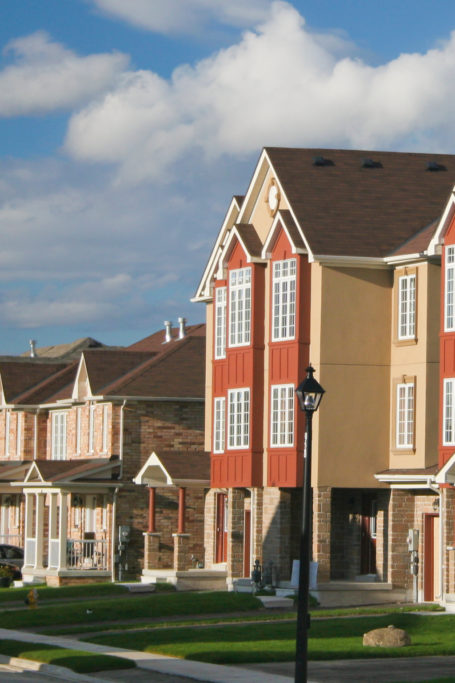
Exploring Car-Free Communities
Photography courtesy of Culdesac
In the 1950s, the American dream neighborhood was a suburban paradise of tract houses featuring matching lawns, attached garages, and lots of elbow room. But over seventy years have passed since the suburbs boomed, and growing populations, traffic congestion, environmental challenges, and cultural changes are sparking a different trend nationwide: communities that eliminate cars and other motorized vehicles, favoring walkability instead. Check out this fascinating alternative-home environment that seeks to offer a healthier, more collective way of life.

Old idea, new take
It would be inaccurate to call the car-free community a totally brand-new concept. Dense urban living existed for many centuries before the single-passenger vehicle, and many of America’s current cities support transportation on foot, train, or bicycle, including New York City and San Francisco. However, modern developers and would-be occupants are pushing the envelope further, opting for neighborhoods that minimize or even eliminate the need for any kind of personal motorized vehicle. Such living could untether individuals from the confines and challenges of automotive-designed infrastructure and grant them access to a more walkable, cohesive, and nurturing environment.
Notable examples
Although this movement is still in its early stages in the United States, several prominent projects are spearheading the shift. For example, a community in progress in Tempe, Arizona, designed by real estate developer Culdesac is set to house over 1,000 residents, all of whom will rely on walking, biking, and public transportation to get around. The development orients its architecture toward green spaces and includes local shops and coworking offices, making it possible for residents to fulfill most of their daily needs within the neighborhood itself. The creators describe living here as being “connected with those around you—your neighbors, local businesses, and the broader city.”
Additionally, the charming coastal community of Seaside, Florida, boasts its own car-free elements, having been built with walkability in mind. Although it does feature roads, it was designed with narrower streets, pedestrian-friendly promenades, and centralized commercial spaces. Such aspects elevate foot and shuttle transportation, working to reduce residents’ dependence on private-vehicle travel. But small towns aren’t the only ones getting in on the trend—Portland’s BIKETOWN service, for one, gives locals and tourists easy access to e-bikes to encourage them to get around the city sustainably.

The benefits of going car-free
As cities grow denser, air pollution and traffic congestion have become increasingly common issues, with the latter contributing to greater stress and exhaustion for drivers. But car-free communities help alleviate these problems in several ways. To start, fewer cars on the road naturally means less exhaust being released into the air, promoting a healthier environment. And without private vehicles, residents are motivated to walk or cycle more, leading to more active lifestyles that can boost their moods along with their physical well-being.
At the same time, implementing these neighborhoods can reduce traffic accidents and save lives. According to the National Highway Traffic Safety Administration, nearly 19,000 people were killed in motor vehicle crashes in the first half of 2024 alone. Eliminating cars can create safer spaces for pedestrians and cyclists, especially higher-risk individuals like children, the elderly, and those living with disabilities.
Furthermore, such communities generally offer a singular area where residents can live, shop, and play, which could reduce the need for long drives. These conveniences may seem particularly appealing to individuals working from home, who aren’t bound by a commute. On top of that, living without a vehicle could be budget friendly. Gen Z young adults specifically are increasingly opting out of car ownership to avoid the high costs associated with buying, insuring, and maintaining one.

Potential downsides
As exciting as car-free communities may seem, integrating them across the country isn’t necessarily seamless. Ones separated from rail lines or other public transportation may make it more challenging for residents to access essential businesses, ranging from retail to health care. But even if a neighborhood provides sufficient travel within its nearby metro area, long-distance visits to out-of-town family members, especially those in more isolated rural areas, can prove difficult and frustrating.
Perhaps most concerning of all, though, is the lack of emergency vehicle access. This can be extra worrisome for elderly folks who may be more likely to need health assistance. However, some communities have factored in these necessities: car-free Fire Island, New York, has pathways in place to allow for emergency and state vehicle travel, while Culdesac’s residences are each ambulance accessible.
A car-free future
While the transition to car-free living may still be in its early stages, the bourgeoning interest in this trend could be reflecting a broader shift in how Americans view urban residences. Public health concerns, quality-of-life challenges, and the reframing of the average workday may be pushing citizens to pursue a new type of living experience. And though limited examples of these lifestyle developments currently exist, innovators continue to rethink real estate, paving the way for a pedestrian-focused future.
3685 Views
Related Posts

Popular Posts