A Georgetown Home Reimagined
Interview with Azali Kassum
Photography by Jennifer Hughes
Azali Kassum, owner of Azali Kassum Design, offers an inside look into the eight-year renovation of her 1790s home in Washington, DC.
Tell us about yourself:
I live in the Georgetown neighborhood with my husband and three children. Though I was born in Boston, my family is from East Africa and India; my heritage is a big part of my love of architecture and design philosophy. I not only draw inspiration from my background and travels but also like to use natural materials and different design styles to create spaces that truly represent who my clients are. I tend to gravitate toward a minimalist yet warm and textured aesthetic, which pulls from multiple eras, and use a lot of sculptural and organic forms, pure materials, and neutral colors to create timeless spaces.
Have you always been interested in design?
I’ve loved architecture and designing spaces since I was little. Whether I was working on an art project or endlessly redecorating my childhood bedrooms, I would immerse myself in these imagined spaces. I also learned how to curate a room from my mother. She would take us to antique shops and auctions when we were young, and I’d watch how she’d gather treasures and place them in different spaces of our home. She would also collect items from our trips, which I enjoy doing as well.
I had hoped to study architecture and design after high school, but I ended up pursuing law instead. However, I continued to use design as my refuge throughout college, law school, and beyond. I lived in New York for a while, and my tiny walk-up rental became a canvas for me to experiment with different color palettes and furniture layouts. It wasn’t until a friend asked me to help with their renovation that I seriously considered a career change, and my design work slowly transitioned from a beloved hobby to a business.
Would you tell us more about your property’s history?
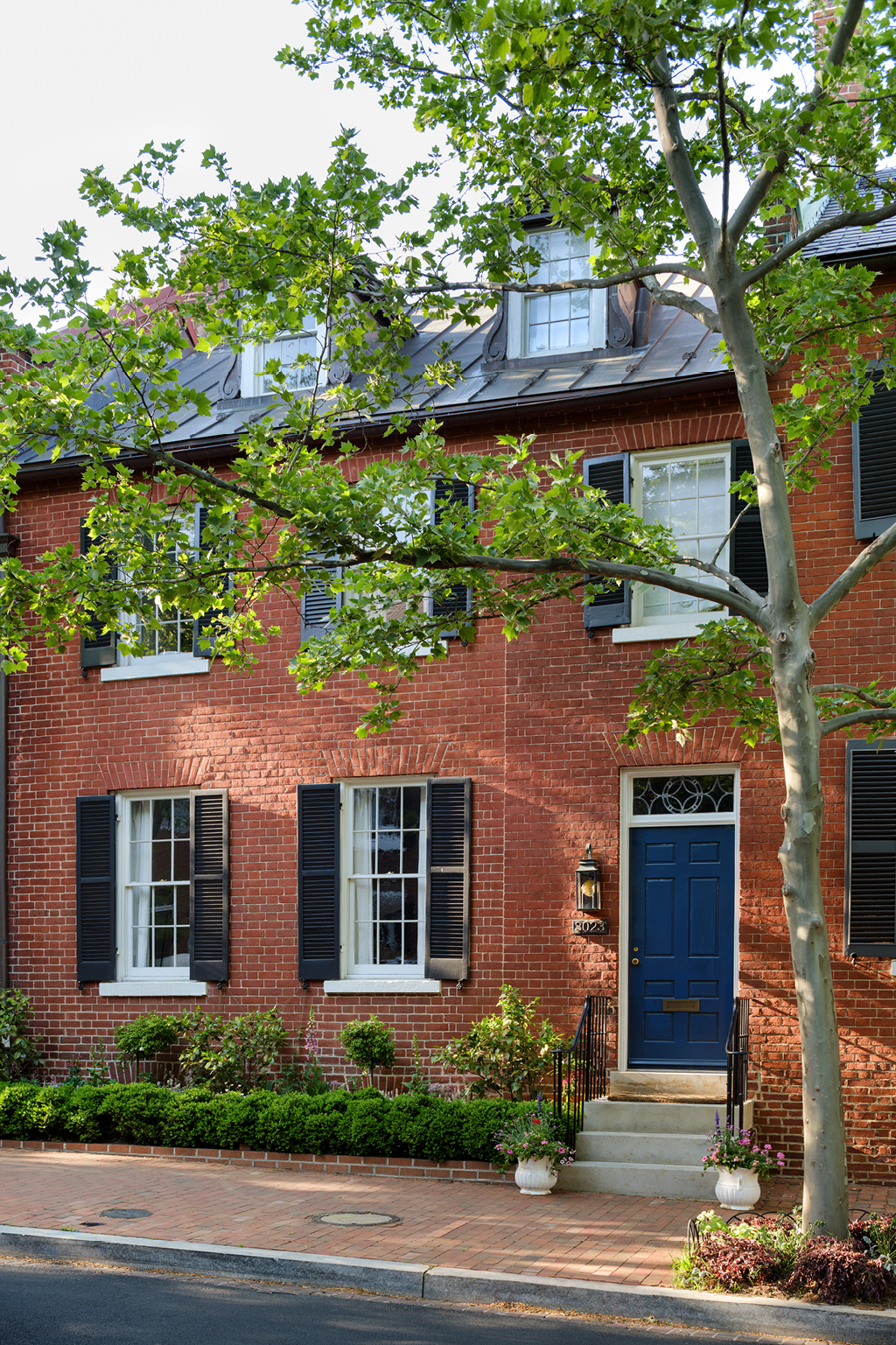
It was built in the 1790s and is sometimes called the “Seam House” because of the visible vertical seam running down the front. It’s actually composed of multiple parts that were constructed at different times and then connected later. There is an original two-story core at the center of the house that was used as a workshop. Then, Washington Bowie, a prosperous Scottish tobacco merchant and godson to George Washington, purchased the home in 1814. In the middle of the nineteenth century, he added a larger two-and-a-half-story addition to the front of the house to bring it forward to meet the sidewalk. Later, the walkway between this house and the one next to it was closed in with new brick to create a front door at the street, hence the presence of the vertical seam.
How did you approach your home’s renovation? What was your primary goal?
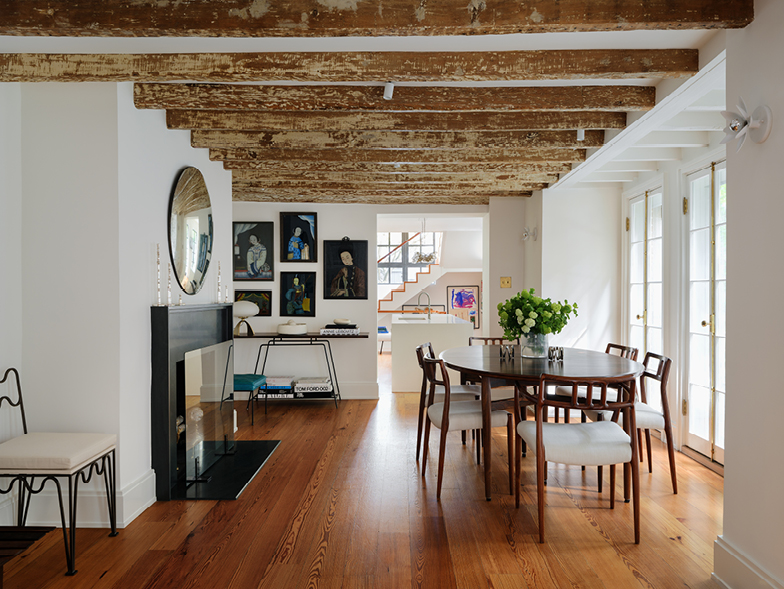
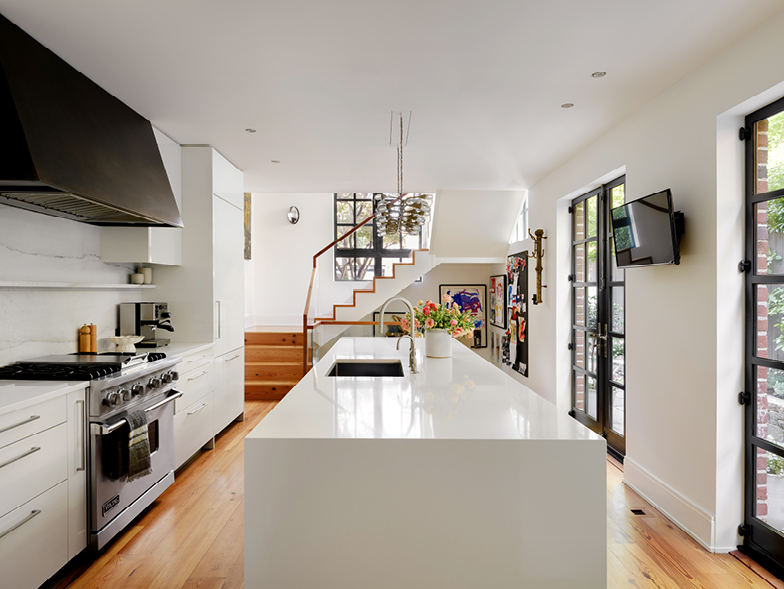
The design evolved a lot during the renovation. The whole project lasted eight years, and when we started, it was just us and our dog, but by the time we had drywall up, we were expecting twins. So we wanted to keep the spaces as open and fluid as possible, which really guided the design as the project progressed. Rather than following the more expected path of a traditional restoration, though, I embraced a pared-down, edited, and fluid approach, exercising more deconstruction and restraint. This was inspired in part by the history and character of the house itself. I really wanted to maintain the original envelope but create a sense of lightness as you moved from old to new. This meant balancing new items, such as the sleek white-lacquer cabinetry, with the original heart pine flooring and exposed beams.
Did you take on this project yourself, or did you have help?
I collaborated with architect Christian Zapatka throughout the process. As with any home in a historic district, we had to consider how we could make the design feel seamless within the context of the surrounding homes. We drew from renovations of row homes in Amsterdam and apartments in Paris to help us find that intentional balance between old and new. Overall, the project quickly went from a light remodel to a full-fledged gut, and we ended up designing a new three-story addition in the back. I also wanted to bring in as much natural light as possible, which resulted in us adding the large steel-cased window at the back of the house. It spans two floors and anchors the floating stairway we designed into the kitchen.
How did you decide what to strip back and what to leave as is?
When my husband and I bought the house, the beams in the dining room were heavily coated in layers of paint. At first, stripping them down was a necessity so that we could repaint them. But once we saw them in their natural state, with only echoes of paint remaining, the whole room came back to life. This area also had a heavy chair rail and a small staircase in the southwest corner, which we removed to gain space on the floor above; that area’s now the primary bath. With these features removed, the beams really took center stage and floated on the plaster ceiling. The room is truly the heart of this house and has been the stage for all our family celebrations.
What was the biggest challenge you encountered along the way?
We initially wanted to knock down the wall in the foyer to create an open plan, but once the drywall was removed, it revealed an original double parlor door. We decided to preserve the brick and the opening instead, so a challenge became an opportunity. Now, when you walk through this space, you see the powder room nestled into what was once the back entrance in addition to the original weathered stone threshold.
How did you go about curating furniture and decor for your home?
It was an evolutionary process. At first, I was driven purely by utility and sought functional items that the twins could easily navigate. But these ended up overwhelming the space and felt too forced. Living in the house helped us figure out what would work best. Ultimately, my love of vintage and midcentury modern pieces drove the design and allowed the house to breathe.
I also wanted to bring in pieces that draw you in with curves and natural materials, as well as ones with history. The first item I found was the Matégot-inspired rosewood console in the dining room. It provides such a fun and unexpected contrast to the cabinet my mother gave me from India, which dates back to the British colonial era. And it proved to be a perfect object to tie the older part of the house into the new steel-cased windows. Pairing this with vintage glass paintings from Asia—which are also from my mother—and modern-day ceramics represents how we blended different eras in the house.
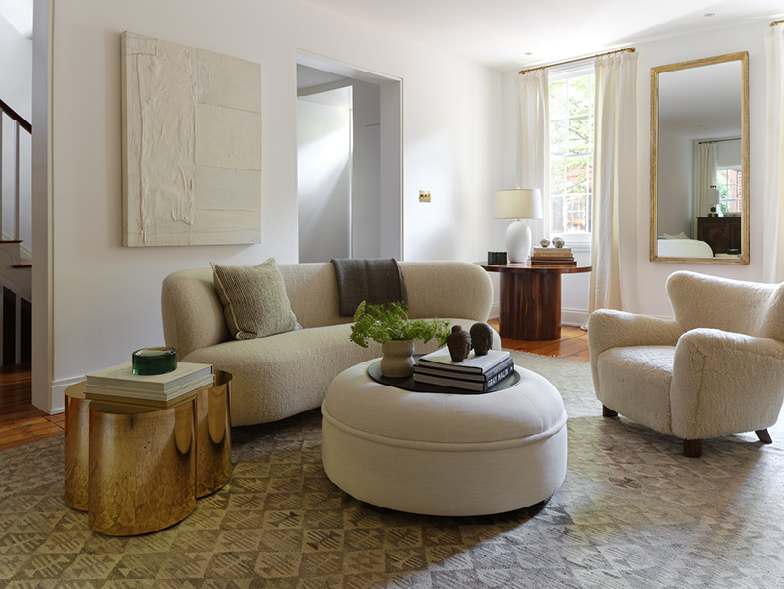
I also found an antique mirror (which actually came from another house in the neighborhood) at a shop down the street from us, and it now anchors the living room. When you sit at the end of the kitchen island, you can see all the way through to it, and it reflects the entire parlor floor. It’s perhaps one of my favorite spots as it reveals each design detail and pulls the house together.
For more info, visit azalikassum.com
3191 Views
Related Posts


Popular Posts